The helicopter crew was looking for anything out of place. Six days into the search for a missing 17-year-old in Victoria’s Gippsland forest, they were scanning bushland about two kilometres east of Stoney Creek when something caught their eye: a tackle box, sitting in the bush where no tackle box should be. They zoomed in. And there, lying on the rocks beside a creek, was William. He lifted his head. He waved. He pumped his fist in the air.
In footage released by Victoria Police, you can see the moment the crew realised the boy they had been hunting for since Friday was alive — and the moment he realised he had been found. Flight officers were winched down to the rocks and lifted him to safety. He was flown to the search command post, where his mother was waiting.
“Amazingly, William is in good spirits and for the most part, in good health. He was taken to hospital for monitoring,” Victoria Police said. His mother, Elizabeth, put it more simply. “I am just over the moon that he’s alive,” she told reporters after the reunion — and then, with a laugh that said everything about relief after six days of fear: “He’s never leaving the house again. He’s grounded for life.”
How he vanished
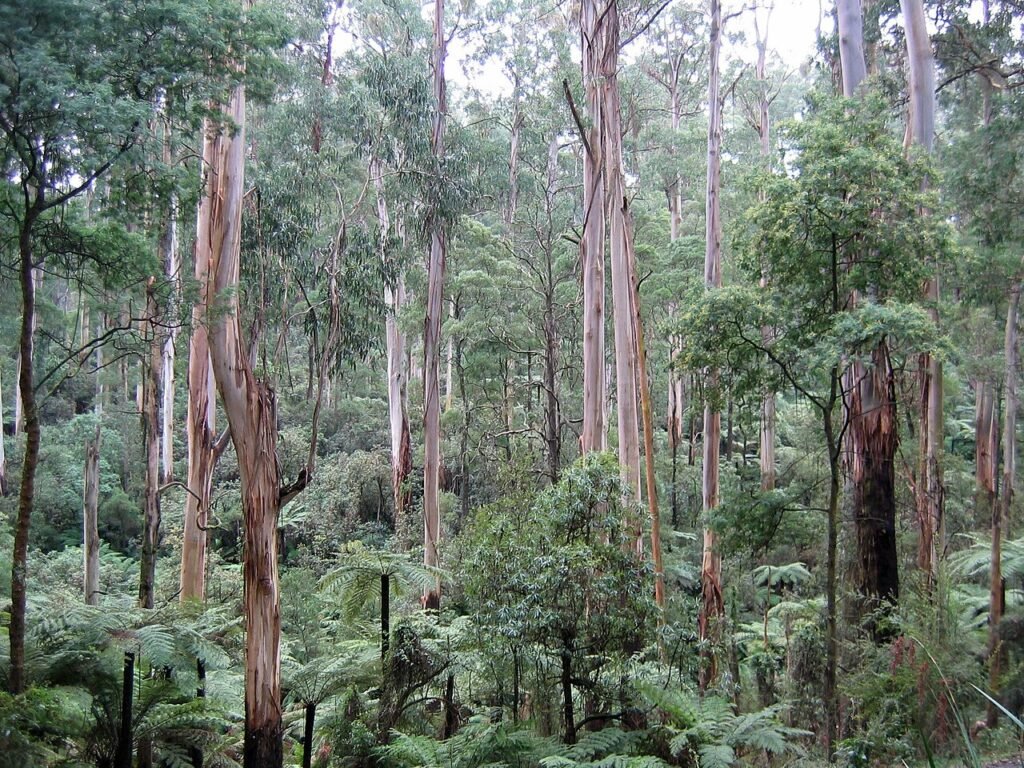
William had been dropped off by his mother on Friday, November 6, for a weekend camping trip with a friend near Stoney Creek Road and the T2 Track, close to Walhalla East — about 180 kilometres east of Melbourne, in the steep, thickly wooded country of eastern Victoria. He walked away from the campsite to fetch more equipment, took a wrong turn, and was lost. The surrounding bush is famously hard to navigate: dense trees, intersecting trails, and landmarks that look the same from every angle. The landscape, as one report put it, can appear almost like a mirror of itself.
He had no mobile phone. He was wearing only shorts and work boots. He had no food and no water with him. And William, who has Level 2 autism — a level of the condition that involves substantial support needs — was on his own in country that tests experienced bushwalkers.
When he failed to return, his friend searched the area without success, and the alarm was raised. What followed was a large search operation involving police, emergency services and hundreds of volunteers, working across steep terrain and dense bush for six days.
Six nights by a creek
William survived by staying near the creek. He drank the water. He rationed a family-sized packet of chicken-flavoured chips — about five an hour, stretched across the days. He used towels as blankets. And at night, to keep himself going, he sang a song that became a source of comfort in the dark.
One night was the worst of them. With temperatures dropping to about 3 degrees Celsius and his food supply exhausted, he feared he might not survive. “That night was pretty scary, but luckily I got through it and woke up the next morning,” he said later.
He spent his final two days trapped near the creek, on a flat rock beside the water, waiting. It was there, on Thursday morning, November 12, that the helicopter found him.
Doctors found he had first-degree sunburn and cuts and scratches to his legs. He was taken first to Latrobe Regional Hospital in Traralgon, then transferred to Melbourne’s Alfred hospital after doctors detected air in his chest and raised concerns about a possible injury to his oesophagus. He was discharged from the Alfred on Monday night, November 16. The next day, he was back on familiar ground: reunited with friends at the Morwell East Football Netball Club, the local club where he hopes to play again.
His mother, who had spent the search reviewing maps with search personnel and discussing areas yet to be checked, said William’s resourcefulness had left her impressed — particularly given the challenges he has faced growing up.
Home, and back to football
William is planning to return to physiotherapy and light training, and hopes to get back to football in the coming weeks. “Returning to the Latrobe Valley had been one of the best feelings,” he said after coming home.
It is a rare outcome, and the police said so themselves — a deeply moving one, after a week in which the odds only got worse. A teenager with no phone, no food and no water, lost in country where even familiar landmarks are hard to tell apart, found because a helicopter crew noticed a tackle box that did not belong.
His mother had been with the search teams when the word came through that crews believed they had found her son. “I’m not usually speechless for words, but I just couldn’t speak; I’ve got my son back,” she said. Six days in the bush, a packet of chips, a creek, and a song in the dark. And then a wave from a rock, a winch from a helicopter, and a mother who can finally laugh about grounding her son for life.